Overview
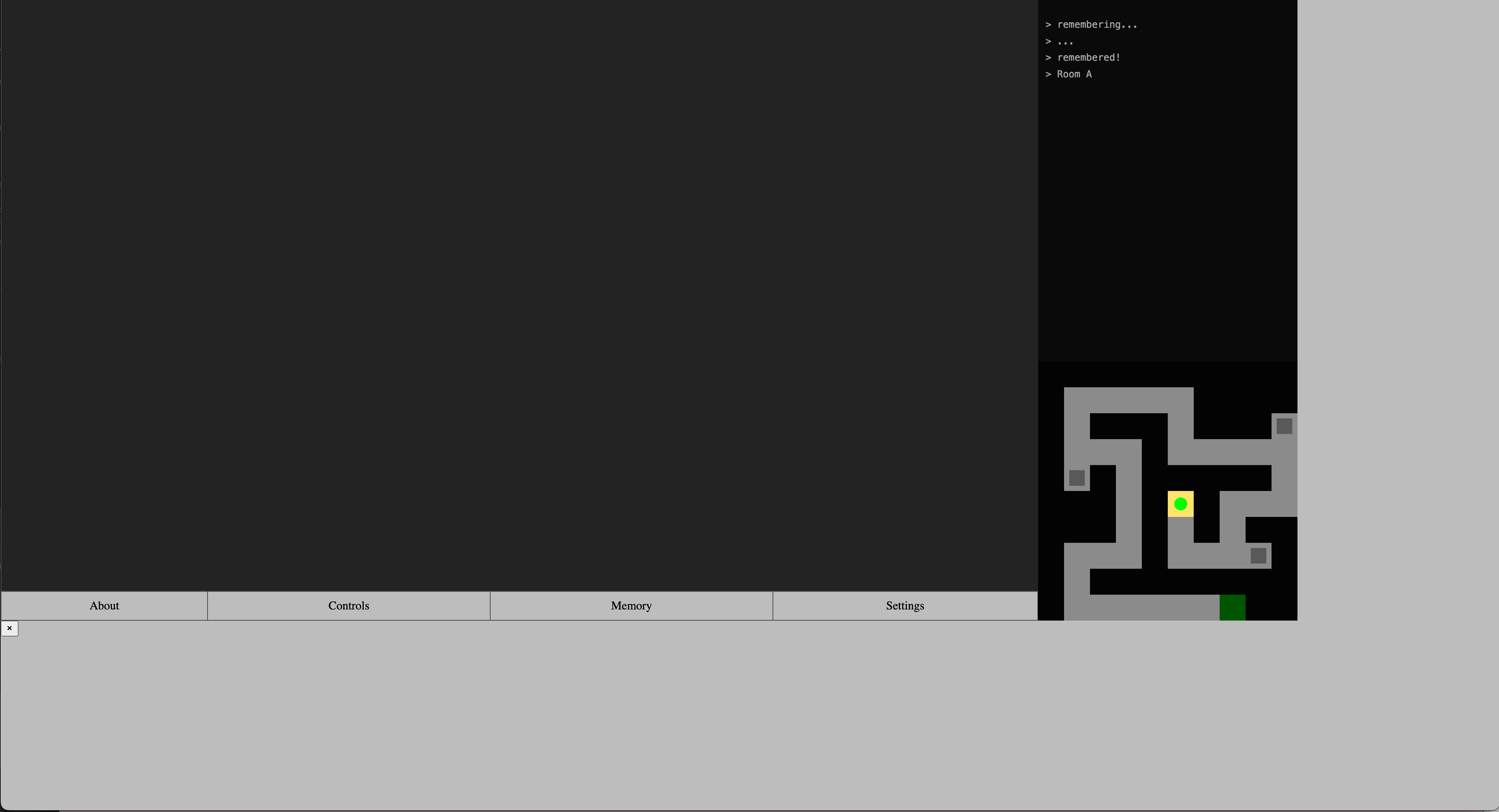
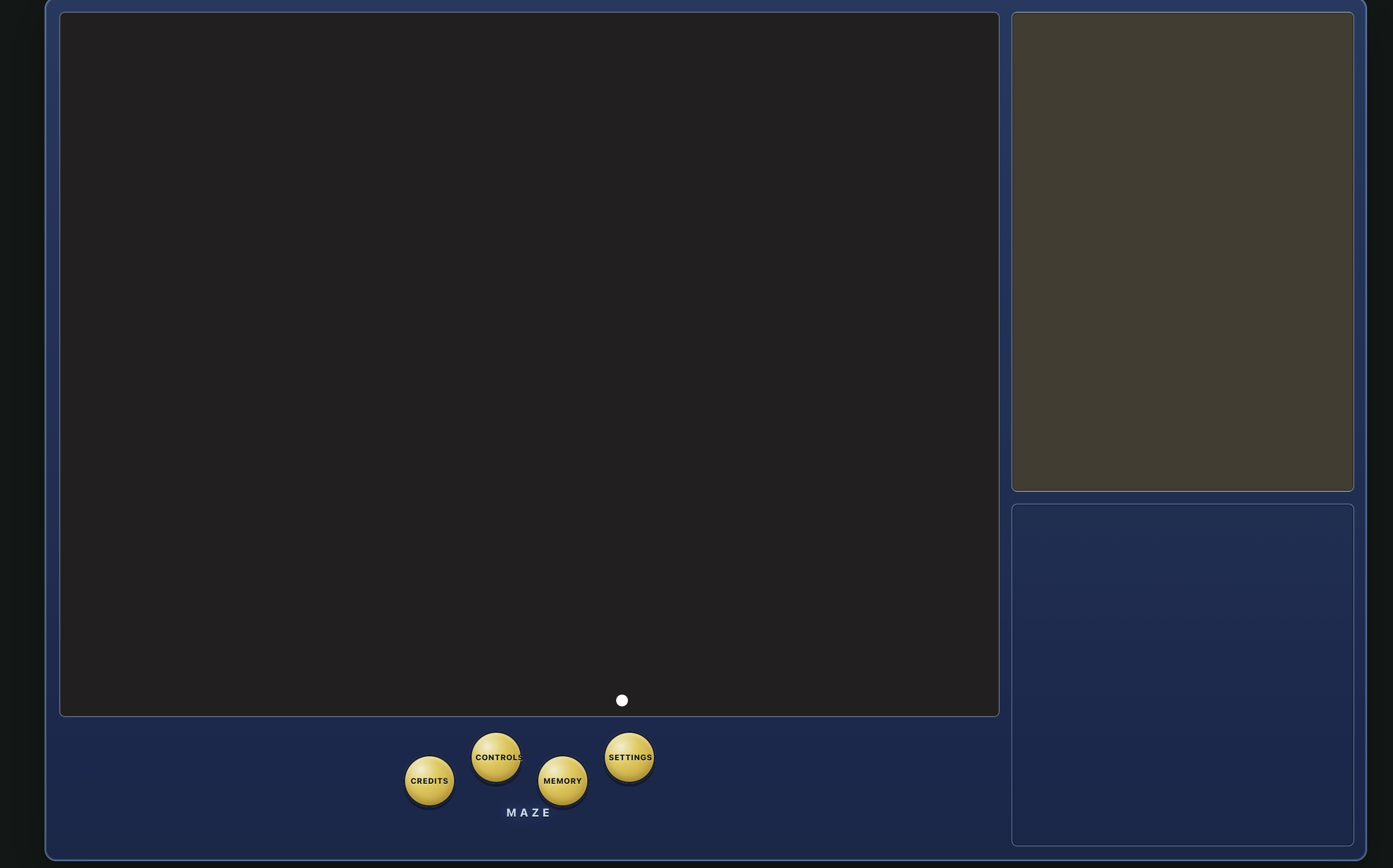
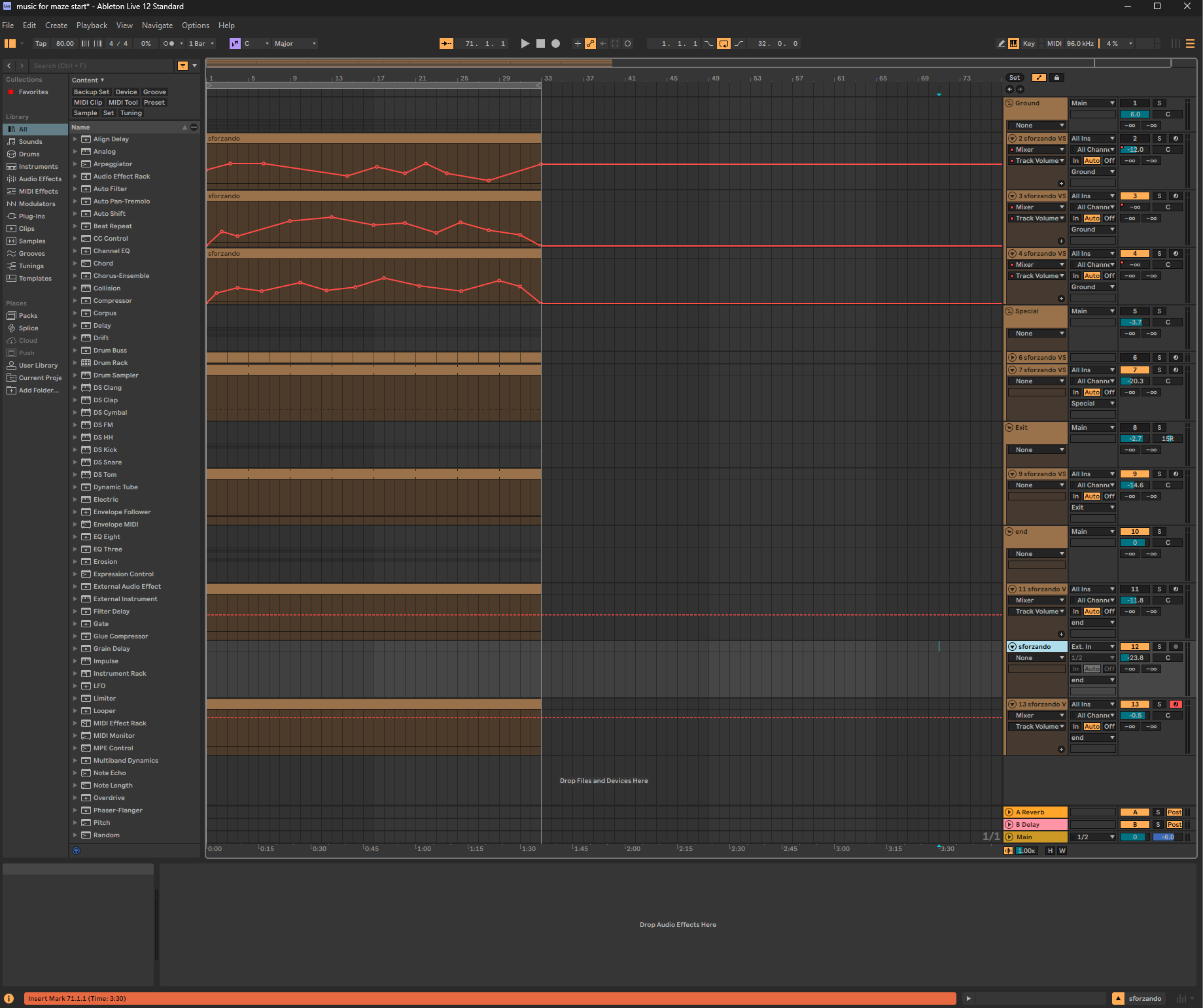
A game on a website, laid out like a toy handheld. The shipped page is HTML, CSS, and JavaScript. maze.js is the game: random maze, movement, special tiles, exit, then a hallway and an open field. Unity WebGL is the 3D view of that grid. Original music stems are mixed in JavaScript (audio.js): ambient, special, and exit. They mix by walkable-tile path distance, not a straight line, so the mix signals where special tiles and the exit are. React is a Vite app (react-ui) built and embedded in the live page for the menu panels and settings.
Contributions
- Wrote the maze in JavaScript: random generation, controls, special tiles, exit, hallway, field, win state.
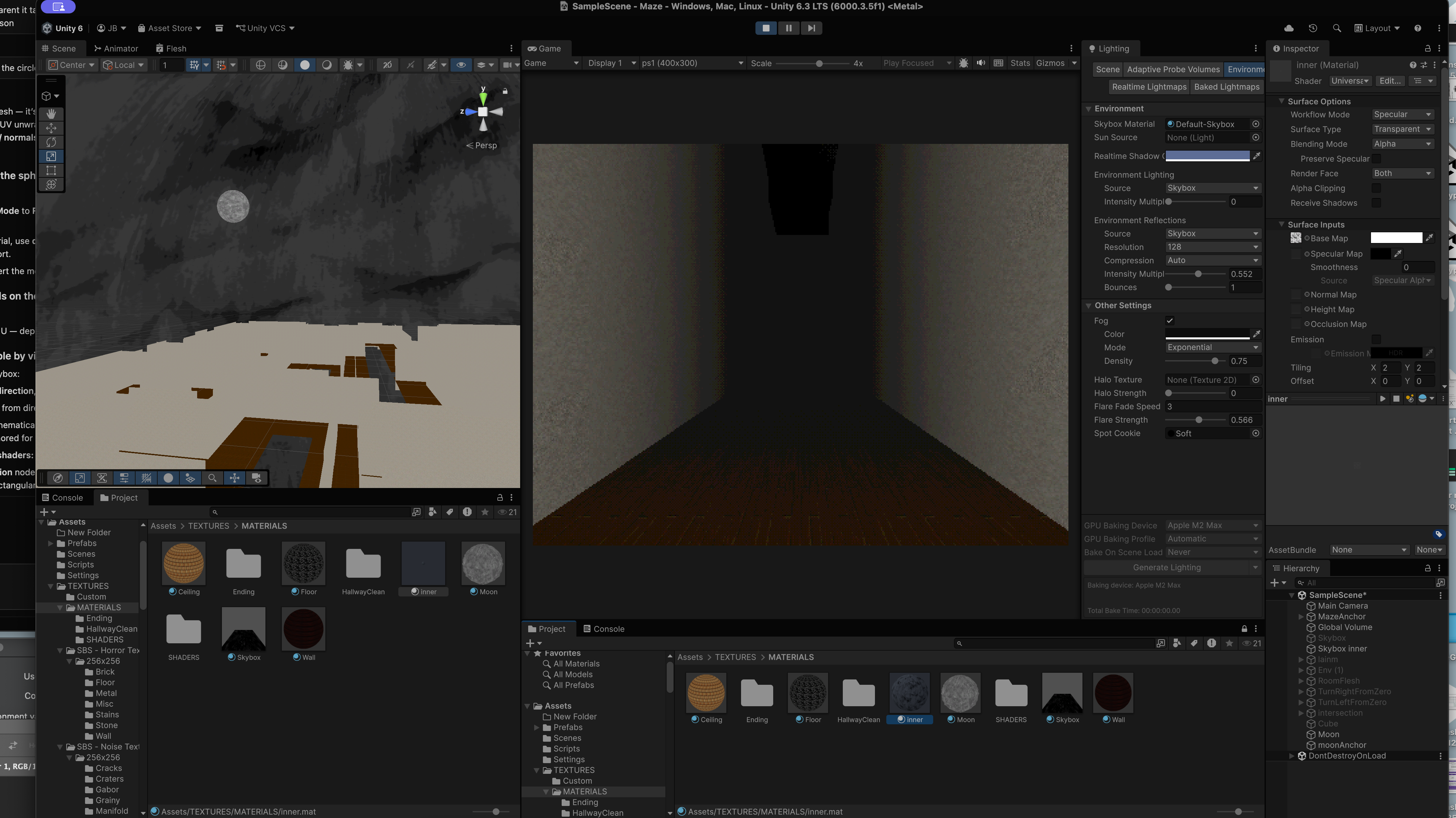
- Unity WebGL draws the 3D maze from that JS grid. The page talks to the Unity instance (SendMessage), including game volume.
- Walking SFX in Unity, timed to how long the player walks, with slight variation. Stem mix in JavaScript: the ambient stem is always on; special and exit stems fade in by walkable-tile path distance, then fade out when you leave.
- Handheld-style site shell in HTML and CSS (menu buttons, special-room counter). React in a Vite app (react-ui) for the menu panels: credits, controls, memory, and settings with music and game volume sliders and a reset. Used Cursor for the shell and the Unity embed, then read and debugged what it produced. Maze logic, rules, music, and audio direction are mine.
Challenges
Building the maze, movement, and game state in JavaScript from scratch, then keeping Unity WebGL in sync with that logic in real time.
Tuning the dynamic music in JavaScript, not Unity: when a layer starts (distance), how it sits on the bed, how it fades out, the mix. Footsteps were in Unity; the stems were not.
Lessons Learned
Solo is hard without help. Cursor took a lot of the remedial programming so I could spend time on design and the parts that mattered. I still had to read what it built and how it worked, or I couldn’t debug it.
I already knew dynamic music from Wwise and from other games. Making it myself, from the ground up, made it obvious: it isn’t decoration. It makes the world interactive and flags in-game events.